

Before Children Can Take Risks, They Have to Feel Safe Enough to Try
During the first weeks of school, we actually ask our preschool teachers to do something that can sound counterintuitive: slow down.
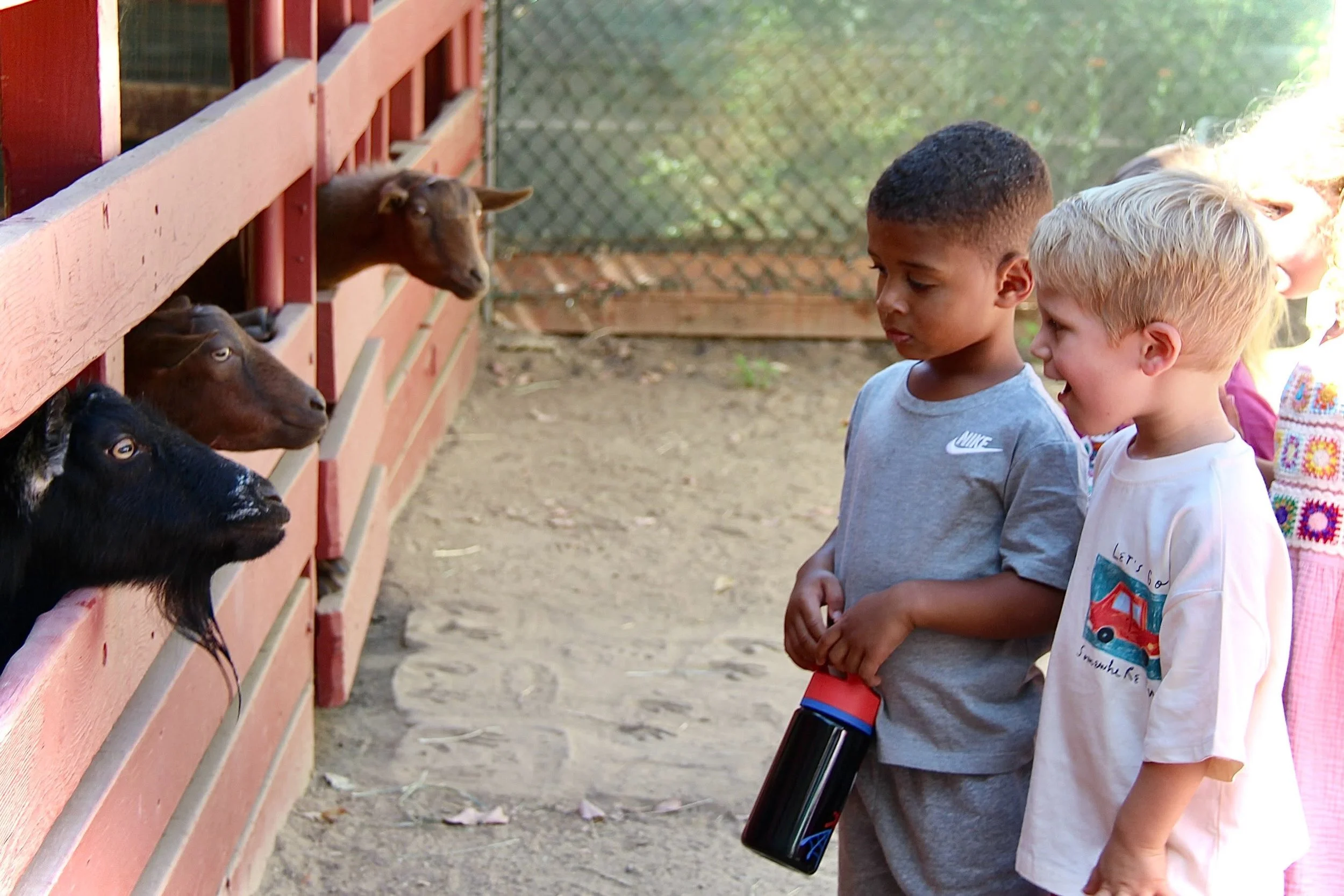
Get on the floor. Follow children’s play instead of directing it. Introduce routines and materials gradually. Open fewer choices at first. Watch closely. That can feel surprising when there is an entire year ahead and teachers have exciting curriculum they can’t wait to introduce. But before we can meaningfully challenge a child, we need to know them. They have to feel safe enough to be fully themselves.
What draws them in? What makes them hesitate? How do they enter a group? What happens when something doesn’t work? When do they persist, and when do they look for an adult to solve it? So we make time for children and teachers to play together, build relationships, learn classroom routines, explore materials, and become comfortable enough to know: I belong here. These adults know me. I can try. We don’t see that as time before the “real” learning begins.
In those first weeks, play gives us answers a worksheet never could.
When children feel secure and connected, their world gets bigger. They venture farther, try something unfamiliar, join another child’s play, persist a little longer, and begin showing us more of what they think, wonder, and can do. That’s why we see these first weeks not as a delay, but as an investment in the entire year ahead.
What Teachers Are Learning While Children Play
Belonging Changes What Children Are Willing to Try
A child who is worried about whether a parent will return, unsure how to enter a group, or still figuring out whether an adult can be trusted has important work to do before we should expect them to take big intellectual or social risks. As that trust grows, so does independence. Children begin trying things without immediately looking to an adult for reassurance. They become more comfortable making mistakes, negotiating with friends, expressing an idea, and staying with something that feels difficult.
Over the course of a preschool year, those small acts of independence add up. The child who needed a teacher beside them to enter the classroom begins walking in confidently. The child who watched from the edge joins the game. The child who immediately asked an adult to solve a problem begins trying a strategy first.
Alongside all of that growth, children are building language, early mathematical thinking, scientific curiosity, literacy, physical skills, creativity, and an increasingly rich understanding of the world. But those things don’t develop in separate boxes. A child’s growing confidence, relationships, independence, curiosity, and academic learning continually strengthen one another. The kind of growth we hope to see isn’t simply children who know more, but children who become increasingly capable of doing more with what they know.
Why We Don’t Solve Every Problem for Them
We’re Learning Your Child With You
Families know dimensions of a child that we may not yet see at school, and teachers often begin noticing things in the classroom that families haven’t had the opportunity to see at home. That’s why partnership matters so much, especially in these early years. A quick observation, a question, or something you’ve noticed at home can help us understand your child more fully.
Robin and Ailin at our Collins Campus, along with Roxana and Christine at our Oxnard Campus, look forward to getting to know your family and sharing what we discover together throughout the year.
So in these first weeks, we’ll keep playing, observing, listening, building trust, and giving children the time they need to become comfortable enough to show us more and more of themselves. Because when a child feels safe enough to try, there is no telling what they may discover they can do.
Warmly,
Robin Gee, Ailin Sacks, Christine Chiché-Lopez & Roxana Mackey