🛠️ The Future Doesn’t Need Blacksmiths
How WHPS Prepares Children for a World That Isn’t Waiting
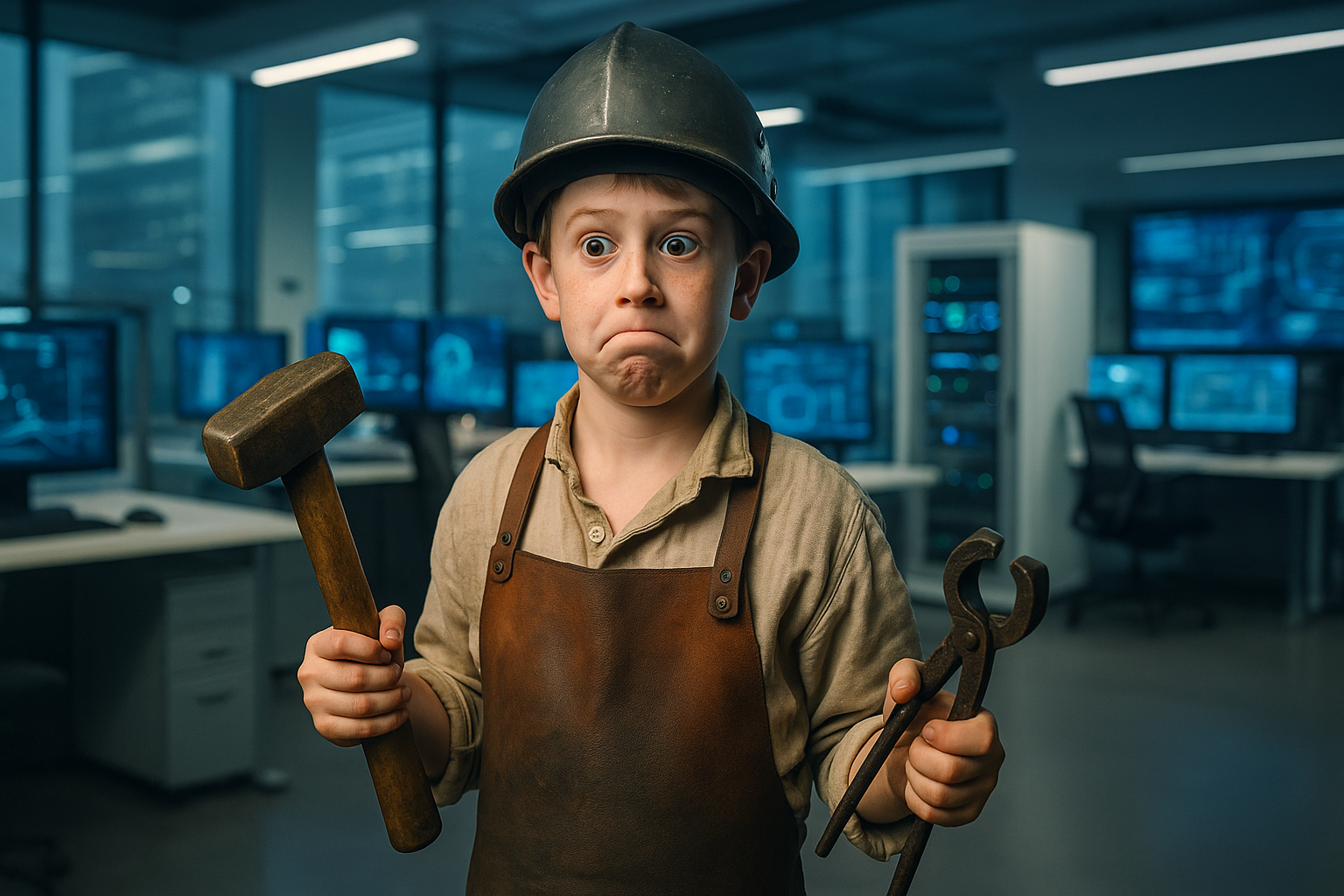
“It feels like we’re preparing children to be good blacksmiths in 1750 — when the factory is coming.”
Experts across education, tech, and the global economy agree: the world is changing faster than traditional schools can keep up.
AI is rewriting entire industries. Automation is swallowing routine work. Innovation cycles are measured in months, not decades. By the time traditional systems revise a curriculum, the world has already moved on.
And while foundational academics still matter, researchers agree: Memorization, quiet compliance, repetition, and routine task completion — the pillars of traditional schools — no longer prepare children for the world they’re walking into.
The future won’t reward kids for following directions. It will reward kids who can think, adapt, collaborate, and lead — especially when there is no clear path.
So instead of asking, “How do we help children succeed in school?” the better question is: How do we help them thrive in a future with no script?
-
WHPS was intentionally built as a nontraditional program — not to be different for difference’s sake, but because the old model simply cannot meet the demands of the world ahead.
We pair strong academics with deep human skill-building in an environment that is safe, predictable, emotionally attuned, and grounded in research and child development.
And it’s worth naming clearly: Our students routinely outperform peers on national assessments — including top independent schools. We are proud of this, of course, but even more so because we don’t “teach to the test.”
Deep thinkers perform well because they are taught to think.
We don’t drill.
We don’t narrow learning into rigid templates.
We don’t squeeze children through a mold designed for 1950.
We don’t teach through the old “I do → We do → You do” factory model, where students learn to follow a pattern and repeat it. That isn’t depth of learning — it’s compliance training.Instead, we cultivate:
• Curiosity
• Ownership
• Reflection
• Transferable understandingNontraditional doesn’t mean chaotic. It actually means MORE intentional, structured, and profoundly human.
Predictability creates emotional safety — the foundation that allows children to stretch, take healthy risks, and build real independence.
It isn’t looser.
It’s smarter. And it’s exactly what the future requires.
🚀 The Three Power Skills Every Future-Ready Child Needs
The future belongs to children who can think, relate, and create beyond what technology can do. At WHPS, these strengths aren’t taught once — they’re lived every day. These three “power skills” sit at the heart of our program.
-
The ability to adjust, rethink, and redesign the plan when circumstances change.
Students learn to:
• Set meaningful goals
• Monitor their own progress
• Revise strategies
• Course-correct with confidence
• Persist when plans shift unexpectedlyIn a world where AI automates routine tasks, agency is the new literacy.
-
Emotional fitness is a child’s internal ability to stay grounded, flexible, and composed — especially when life gets messy.
At WHPS, students develop this through:
• SEL language and reflection tools
• Supportive coaching and modeling
• Restorative practices instead of punitive ones
• Opportunities to repair, reconnect, and try againThis is the difference between merely coping and truly thriving.
Children who can regulate and recover quickly have a measurable advantage in every domain. -
Machines surpass humans in speed and accuracy — but not in human connection.
WHPS students practice:
• Empathy
• Perspective-taking
• Conflict navigation
• Effective communication
• Team-based problem-solvingThese aren’t “soft skills.”
They are the leadership competencies economists and futurists consistently rank as top predictors of future success.
🧭 Structure + Humanity = Real Growth
These three skills form the foundation — but the way we structure school is what makes them stick. Below is how WHPS weaves predictability, academic rigor, SEL benchmarks, and collaboration into a system where children don’t just learn these capacities — they live them.
-
Future-ready learning isn’t loose. It’s actually more structured, more intentional, and more transparent than traditional programs.
At WHPS, students grow through:
• Predictable daily routines
• Clear academic & SEL benchmarks
• Reflection and goal-setting cycles
• Two-teacher classrooms
• Morning Assembly & leadership practice
• Collaborative and project-based learningChildren know exactly what they’re working toward, why it matters, and how to improve.
When structure meets humanity, kids soar.
This is why WHPS students often leap ahead of peers who may master content but miss the deeper capacities the future demands. -
These skills still matter, but they no longer define readiness:
• Memorizing vs. thinking
• Working alone vs. collaborating
• Quiet endurance vs. emotional fluency
• Compliance vs. agency
• Checking boxes vs. building purposeExperts may not agree on the exact shape of the future — but they agree on who will thrive: adaptive, emotionally intelligent, collaborative humans.
-
Traditional schools prepare children for tests.
WHPS prepares children for a world without a script.
We’re not helping children compete with machines.
We’re helping them become more deeply, powerfully human.That’s what tomorrow demands.
And that is exactly what WHPS is designed to deliver.
⭐ The Bottom Line: Building Thinkers for the World Ahead
Schools that are doing this well aren’t choosing between teaching content and building human capacity — they’re doing both. Knowledge still matters, but it has to live alongside adaptable thinking, true growth mindset (not the poster version), and the ability to set and pursue goals even as the world shifts around them.
These skills don’t come from worksheets. They come from practice — real opportunities to think, pivot, collaborate, and try again.
That requires personalization. It requires attention. It requires a system built intentionally, not accidentally. And it’s nearly impossible to deliver that in a class of 30 students with one teacher and a rigid script.
WHPS was built for this work.
We teach with research in one hand and real-time student needs in the other. After working across public, private, secular, and religious schools, I can say this with confidence: what we do here is practical, research-aligned, and directly connected to the skillset today’s children will need most.
And even with all our strengths, we’re not finished. We’re evolving — because the world is evolving. And our children deserve nothing less.