

Preschool at WHPS
Where Curiosity Becomes Learning
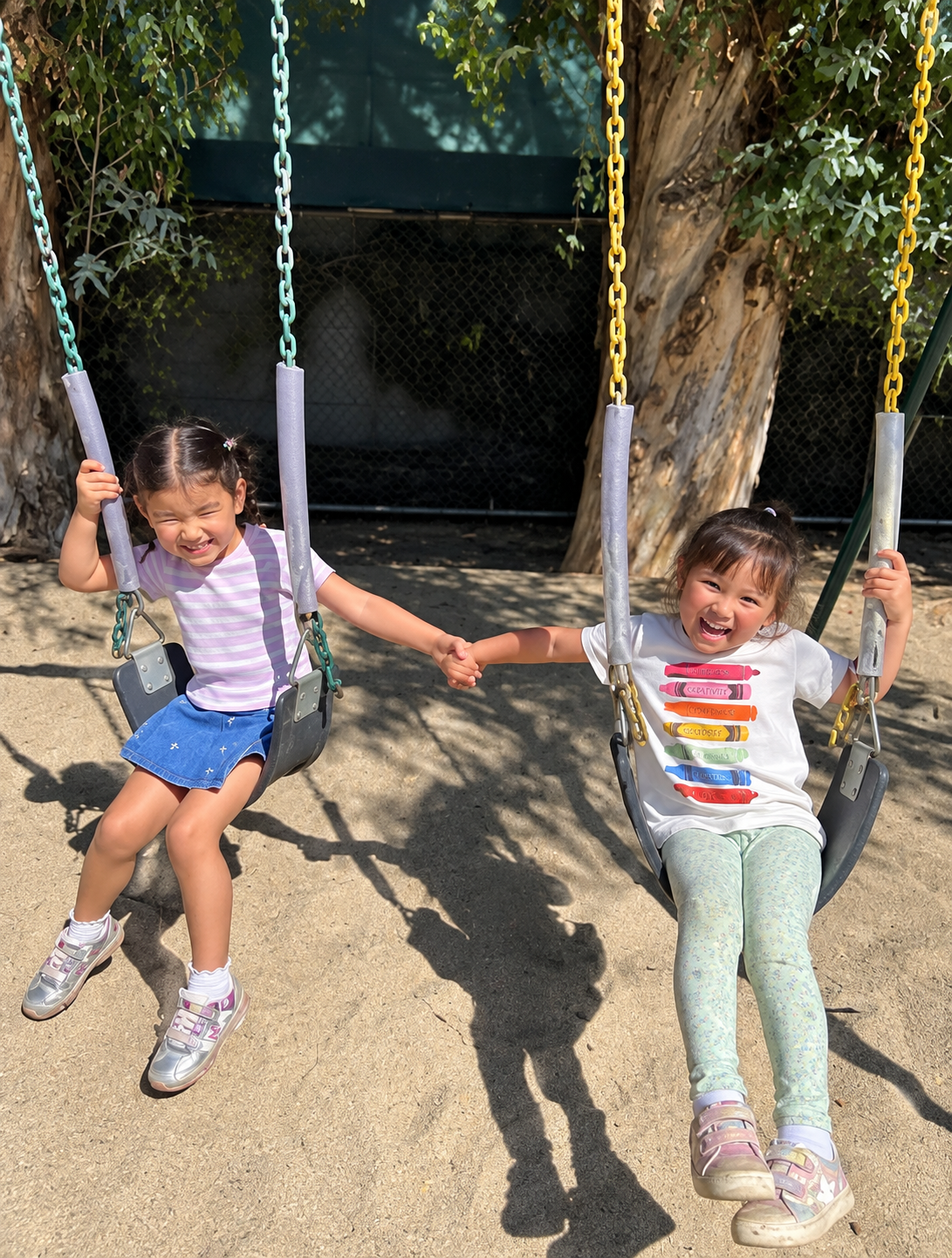
Young children are capable of extraordinary learning when something genuinely captures their interest. Our preschool program is built around that idea.
From 18 months through Early TK, children investigate, build, talk, move, imagine, create, and solve problems. Teachers meet children at the highest level of their interest, then intentionally build the language, literacy, mathematics, science, social-emotional, physical, and thinking skills that help them go further.
The learning is intentional. Childhood still feels like childhood.
Curiosity With Purpose
Children Learn More When They Care About What They're Learning
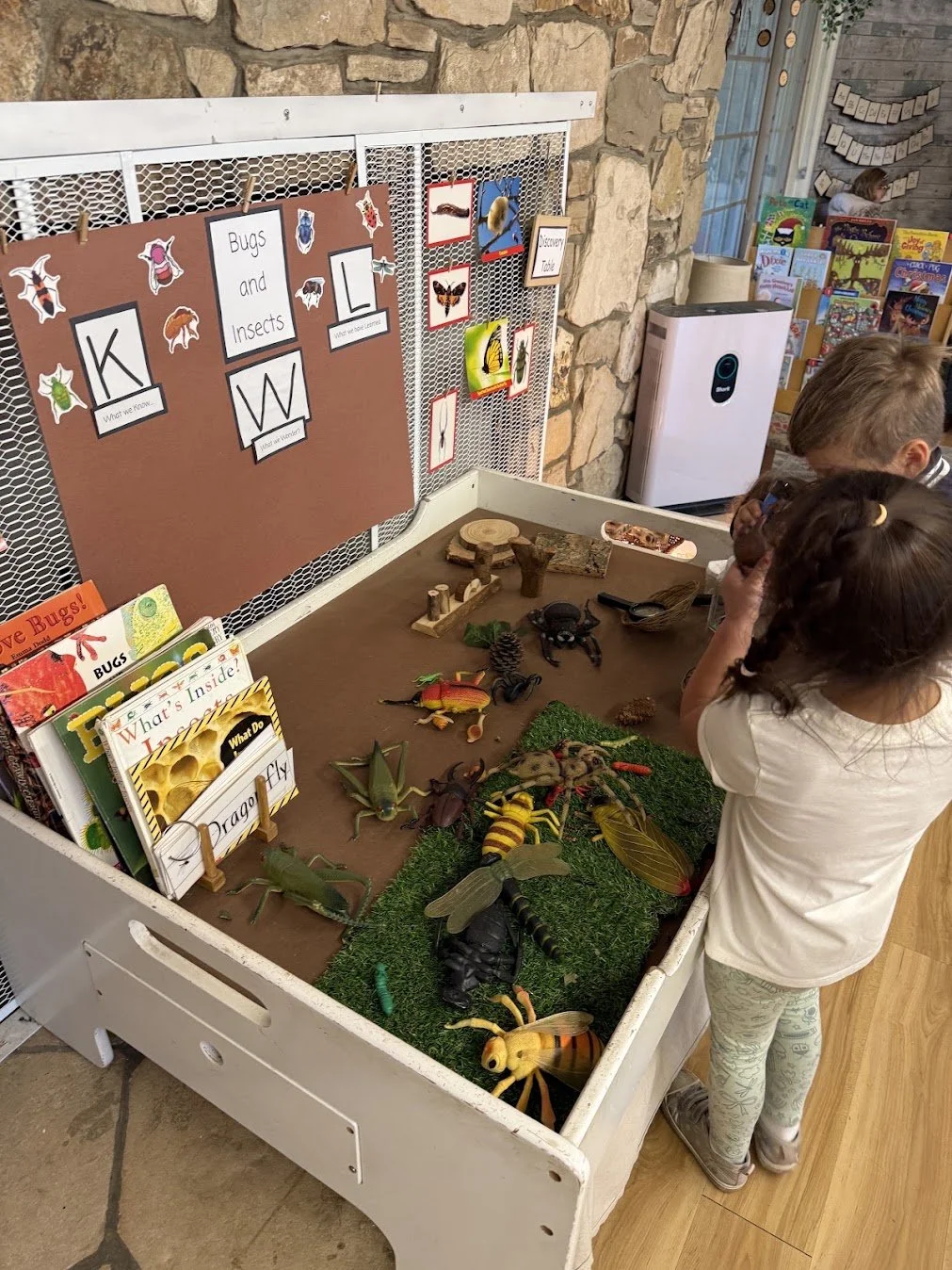
Children's questions and interests give teachers a powerful place to begin. They are the starting point, not the finish line.
A fascination with insects, space, construction, animals, or how something works can become an investigation rich with language, mathematics, science, art, collaboration, and problem-solving. Teachers observe closely, ask purposeful questions, introduce new materials and ideas, and know when to add instruction, practice, or a new challenge. An investigation might begin with what children already know, what they wonder, and how they could find out. It may last days or weeks as new questions emerge, while teachers weave in language, early literacy, mathematics, science, and social learning.
Purposeful Play
Play Can Carry Remarkably Sophisticated Learning
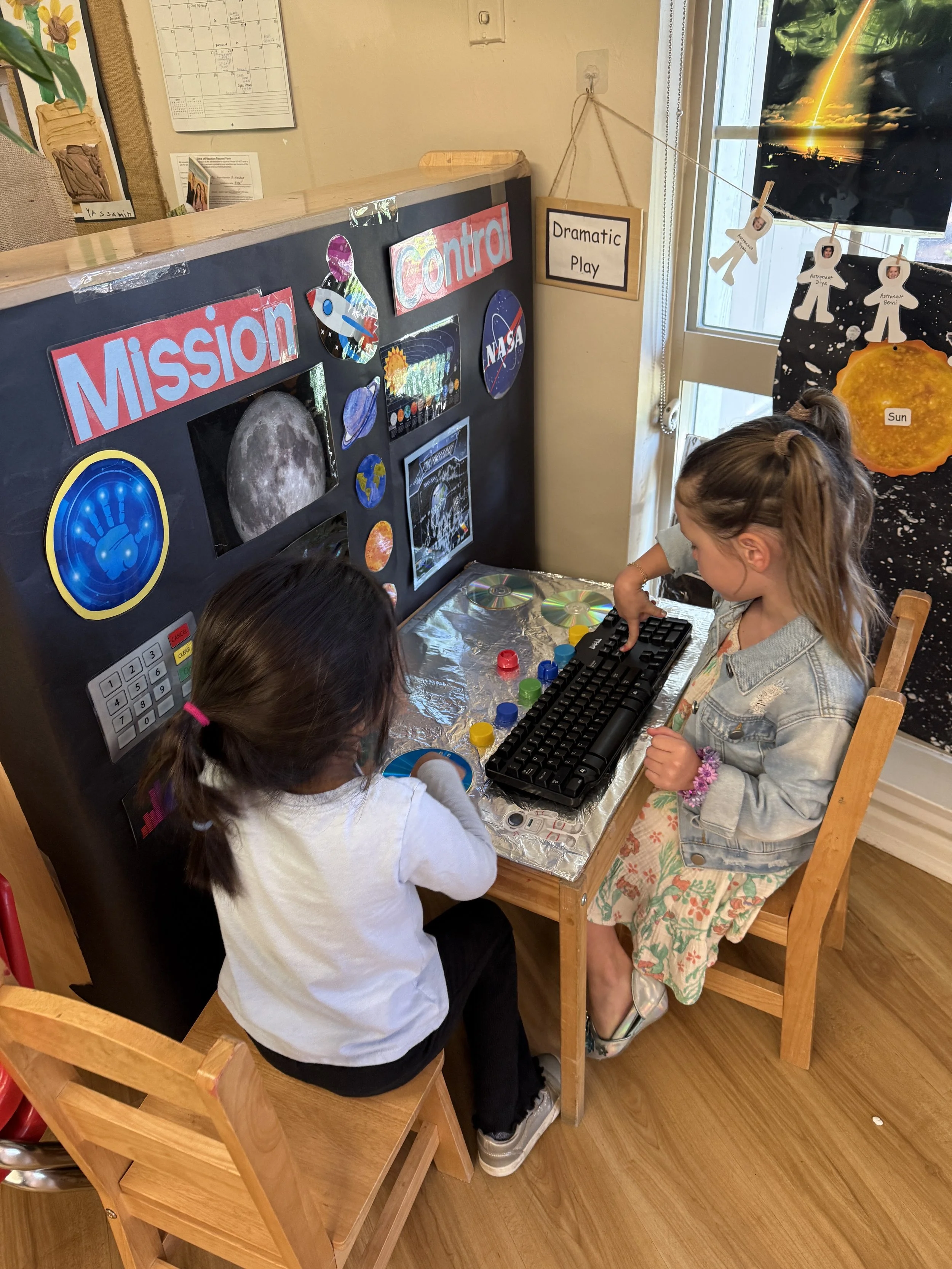
Young children learn with their whole bodies and minds, by doing, building, talking, experimenting, moving, imagining, questioning, and making connections.
Dramatic play at WHPS is intentionally designed to take children's thinking further. In a classroom store, children may ring up purchases and work with increasingly complex numbers. Ramps, cars, and marbles become opportunities to investigate speed, weight, distance, and cause and effect. When one class became fascinated by how people get sick, teachers helped turn that curiosity into a deeper investigation of germs: swabbing and comparing surfaces, learning how illness spreads, building models of internal organs, and developing increasingly sophisticated scientific vocabulary along the way.
Teachers know what children are ready to learn and shape the environment, materials, questions, and experiences around them to take that learning further.
What Inspires the WHPS Approach?Research, experience, and the children in front of us.
If you've explored preschools, you've likely encountered Montessori, Reggio Emilia, play-based learning, and other approaches. You may also have heard of Piaget and Vygotsky, whose research helped shape how educators understand exploration, social interaction, and learning with appropriate support.
WHPS began more than five decades ago when our founding director created a school informed by educational research and the kind of childhood experience she wanted for her own children. The program has continued to evolve with new research and generations of children.
Rather than asking children to fit one philosophy, we draw on what helps them learn: meaningful choices, collaboration, inquiry, modeling, direct instruction, and practice. Teachers respond to children's interests while introducing questions and experiences that open new possibilities.
The approach serves the child, rather than asking the child to fit the approach.
How Do Teachers Know What Comes Next? Knowing the child. Understanding development.
Great preschool teaching requires knowing children well and understanding child development deeply. Our teachers bring training, experience, and ongoing professional development to recognizing what children are ready for now and what they may be ready for next.
They observe children closely: how they communicate, approach a problem, use materials, interact with others, persist through difficulty, and apply emerging skills. Those observations help teachers decide when to step in, when to step back, when to model or teach something directly, and when to add just enough challenge to move the learning forward.
That intention is present even in play. Children may simply feel that they are building, pretending, experimenting, moving, or having fun. In the background, a skilled teacher may be introducing new vocabulary, extending a mathematical idea, asking a question that changes the direction of an investigation, helping children work through a social challenge, or adding materials that invite more complex thinking.
The experience feels natural to the child because good learning should. The teaching behind it is anything but accidental.
This same idea continues in Elementary, where our Learning Progressions make each child's next steps more explicit.
How Do Children Learn to Be Part of a Community? Building relationships and independence.
Social-emotional learning is woven throughout the day. Morning meetings, friendships, play, shared materials, classroom routines, and collaborative work give children real opportunities to practice listening, expressing needs, waiting, negotiating, adapting, advocating for themselves and others, and solving problems together.
Teachers intentionally coach children through these moments. They help a child find the words to ask for what they need, practice what to do when something doesn't go their way, recognize when emotions are getting big, and discover strategies that help them regain control. Those strategies may look different from one child to another. As children become more capable, teachers gradually step back.
The environment is designed to give children opportunities to practice. There may not be a bicycle available at exactly the moment a child wants one. A learning center may have room for only a few children. A child may spill while learning to pour or need to work through frustration when something doesn't happen as planned. We don't remove every manageable challenge. With thoughtful teacher support, these everyday moments become practice in flexibility, communication, patience, self-regulation, independence, and problem-solving.
Sometimes working through the challenge is where the learning happens.
These capacities matter enormously as children move toward Kindergarten. A child who can communicate a need, recover from frustration, regulate emotions, participate in a group, persist when something is difficult, and ask for help is better able to engage with increasingly sophisticated academic learning. That is true for every child, including children who are already academically advanced. Strong early academic skills are valuable, but children also need the self-regulation, flexibility, independence, and learning habits that allow them to make the most of those abilities in Kindergarten and beyond. Readiness isn't only about what children know. It's also about developing the skills that allow them to learn, participate, and find joy in learning.
How Do We Teach Identity & Belonging? Understanding themselves and others.
We want children to feel secure in who they are, know that they belong, and grow genuinely curious about people whose lives and experiences may be different from their own.
Through books, classroom experiences, conversations, visitors, and the life of our school community, children are introduced to different cultures, customs, families, abilities, and perspectives in age-appropriate ways. Our families and parent organizations add to that richness through special programming, storytellers, assemblies, STEM experiences, and celebrations such as Holi and Lunar New Year.
The goal is simple: help children understand themselves, appreciate others, and feel at home in a diverse world.
See more of how belonging comes to life at WHPS →Growing Capability
It's Remarkable What Young Children Can Do When They're Given the Chance
Independence grows when children have real opportunities to practice it.
Our classrooms are designed with children in mind. Materials are within reach. Mirrors are where children can see themselves. Even cups are sized so small hands can learn to pour, serve, carry, and clean up.
Teachers provide plenty of love and care while also knowing when to model, encourage, help, and when to give a child time to try. Spills and imperfect first attempts are part of the process. So is the pride that comes with discovering, I can do this.
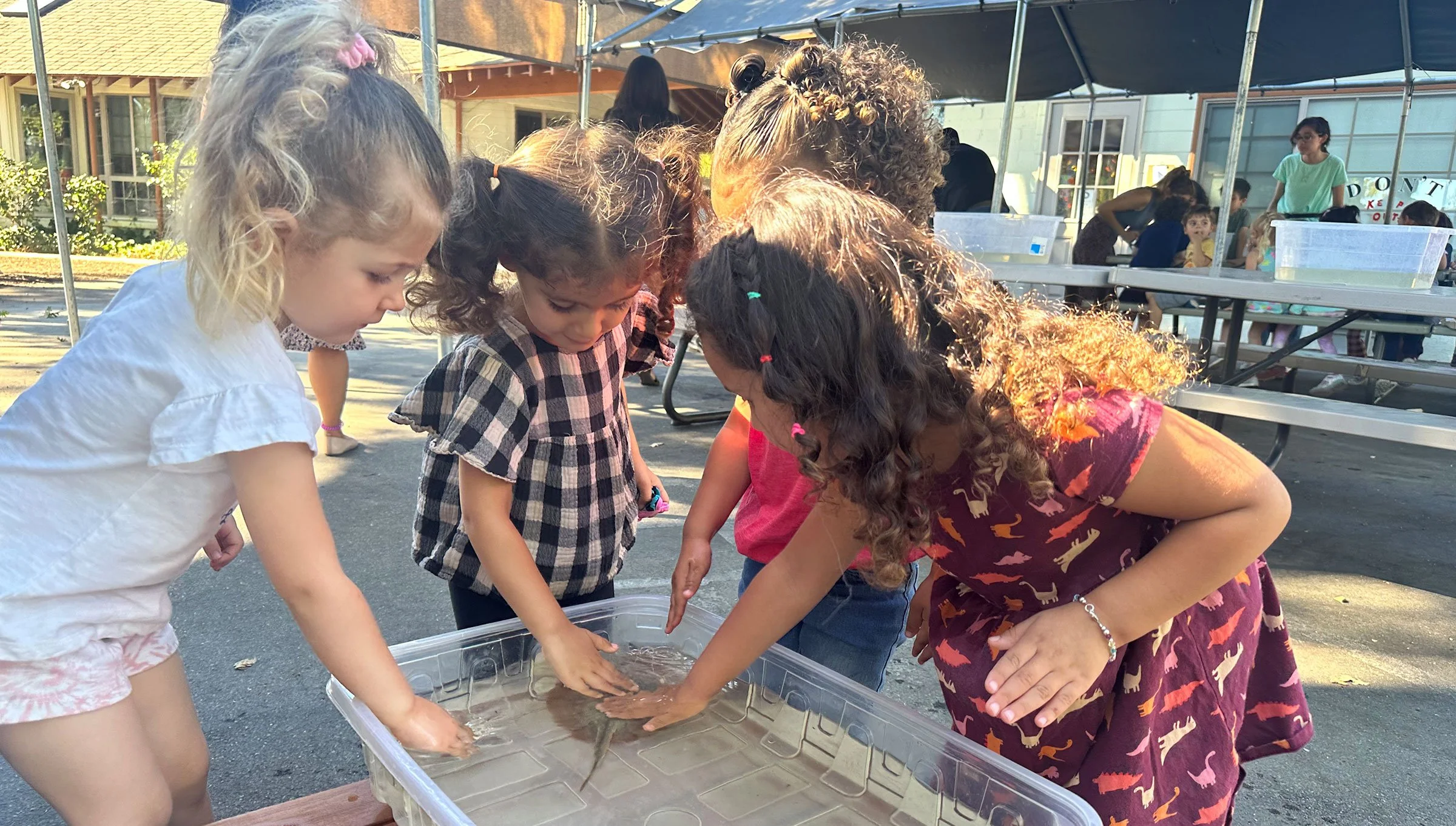
Growing With Your Child
The Learning Deepens as Children Grow
From Toddlers through Early TK (ages 4–6), children's skills develop in increasingly sophisticated ways. Our developmental approach helps teachers recognize what each child is ready to learn next.
A Developmental Approach to Learning
Children may explore the same topic or take part in a shared classroom investigation, while working toward different learning goals. Teachers draw on their understanding of child development, classroom observations, and knowledge of each child to offer meaningful next challenges.
Our learning progressions are not the curriculum. They describe how skills typically build over time and help inform teachers' goals for each child. They are guides, not limits: when children are ready to go further, the learning grows with them.
Explore selected examples from our age-level objectives across five areas of development. These are pathways for growth, not exhaustive checklists or fixed timetables.
Language, Literacy & Communication
Uses single words and two-word phrases, follows two-step directions, points to named pictures, and listens to short stories.
Uses two- to three-word sentences, follows three-step directions, recalls simple story events, and begins recognizing letters and rhymes.
Speaks in complete four- to five-word sentences, tells and recalls stories, joins discussions, recognizes their first name and uppercase letters, and explores lowercase letters.
Discusses and sequences stories, draws conclusions, follows four-step directions while working toward longer sequences, recognizes upper- and lowercase letters, and explores rhymes and beginning consonant sounds.
Mathematics & Reasoning
Begins sorting shapes and colors, builds block towers, completes simple knobbed puzzles, and explores objects through hands-on play.
Explores numbers and counting, sorts objects, completes simple patterns, identifies basic shapes and colors, and compares size and position.
Counts objects to 10, is introduced to counting 1–20, names a wider variety of shapes, compares and classifies, and sequences pictured events.
Counts verbally to 50, recognizes numerals 0–30, compares quantities, explores subtraction, sorts into categories, and works with patterns, position, and time.
Inquiry, Discovery & Creative Thinking
Explores manipulatives, begins make-believe play, scribbles spontaneously, and investigates how familiar objects work.
Uses pretend play, puzzles, sounds, drawing, sorting, and descriptions of objects to notice differences and express ideas.
Builds imaginative play with peers, describes how objects are used, identifies sounds, and sequences events to make sense of experiences.
Contributes to sustained investigations, explores cause and effect and the natural world, records observations, communicates findings, and considers how people affect living things.
Social-Emotional Growth & Independence
Grows comfortable separating from caregivers, plays alongside peers, joins group activities with support, and begins feeding and washing independently.
Makes choices, expresses needs and feelings, cooperates with peers, takes responsibility for belongings, and develops dressing and toileting skills.
Takes initiative, manages personal care, participates in cooperative and dramatic play, shows concern for others, and uses words to solve problems.
Sustains attention, works with peers toward shared goals, handles disagreements, takes responsibility for belongings and routines, and grows in independence.
Movement & Fine-Motor Development
Walks, begins running and jumping, climbs, kicks a ball, rides a pedal-free bike, turns book pages, and grasps a crayon.
Runs, jumps, climbs, pedals a tricycle, strings large beads, builds with blocks, copies a circle, and begins using scissors.
Balances and hops on one foot, throws and catches, pedals, cuts, traces shapes, draws, completes puzzles, and pours water.
Skips, balances, throws and catches, cuts and copies shapes, strengthens pencil grip, prints letters and numbers, and works toward printing a first name and last initial.
Children may be ahead in one area while still developing skills in another. Our age-level objectives describe skills children generally work toward at each stage. Twice-yearly progress reports reflect what teachers observe children demonstrating independently and consistently at school over time.
Understanding and Documenting Each Child's Growth
Alongside ongoing classroom observation and twice-yearly progress reports, enrolled families may request a complimentary, confidential Ages & Stages Questionnaire (ASQ) developmental screening through our trained preschool leadership team. Perspectives from home and school can help identify strengths, areas for growth, and useful strategies.
After Thriving Threes
Two Pathways for the Next Stage
After Thriving Threes, children can move into either of two WHPS programs for four-year-olds. Both build on the foundations developed in Preschool, with the best fit determined by each child’s readiness.
Two TK Pathways. One Thoughtful Decision.
For children turning four by September 1, WHPS offers two pathways: Early Transitional Kindergarten (ETK) in our Preschool division and Transitional Kindergarten (TK) in our Elementary division. Both prepare children for Kindergarten, but the structure, pace, and daily experience differ.
| What to Consider | ETK Preschool Division | TK Elementary Division · Oxnard Campus |
|---|---|---|
| Schedule & arrival | Begins at 8:45 a.m. Children arrive before the program begins. Three-, four-, and five-day options, including half days through 1:00 p.m. | Begins at 8:00 a.m. Children arrive before the school day begins and attend five days per week. |
| Teachers & specialists | Children spend most of the day with their classroom teachers. Two specialists are introduced gradually: P.E. and Animal & Nature Studies at Oxnard, or P.E. and Music at Collins. | Much of the afternoon includes six specialists: Technology, P.E., Visual & Performing Arts, Music, Spanish, and Animal & Nature Studies. Children transition among more teachers and learning spaces. |
| Drop-off & independence | Families walk children to their Preschool classroom and hand them off to their teachers. Independence develops within familiar routines. | Children exit the car at drop-off and walk to class independently, following Elementary arrival routines and managing more transitions. |
| Learning experience | Purposeful play, projects, centers, and targeted small-group instruction, including Learning Without Tears and Singapore Math Readiness. | Foundational phonics, Reading & Writing Workshop, student writing and publishing celebrations, and Singapore Math, with whole-group, small-group, and individualized instruction. |
| Field trips | Family drivers support field trips, continuing the familiar Preschool approach. | Classes travel by bus for field trips as part of the Elementary experience. |
Early TKPreschool Division
- Schedule & arrival
- Begins at 8:45 a.m. Children arrive before the program begins. Three-, four-, and five-day options, including half days through 1:00 p.m.
- Teachers & specialists
- Children spend most of the day with their classroom teachers. Two specialists are introduced gradually: P.E. and Animal & Nature Studies at Oxnard, or P.E. and Music at Collins.
- Drop-off & independence
- Families walk children to their Preschool classroom and hand them off to their teachers. Independence develops within familiar routines.
- Learning experience
- Purposeful play, projects, centers, and targeted small-group instruction, including Learning Without Tears and Singapore Math Readiness.
- Field trips
- Family drivers support field trips, continuing the familiar Preschool approach.
Transitional KindergartenElementary Division · Oxnard Campus
- Schedule & arrival
- Begins at 8:00 a.m. Children arrive before the school day begins and attend five days per week.
- Teachers & specialists
- Much of the afternoon includes six specialists: Technology, P.E., Visual & Performing Arts, Music, Spanish, and Animal & Nature Studies. Children transition among more teachers and learning spaces.
- Drop-off & independence
- Children exit the car at drop-off and walk to class independently, following Elementary arrival routines and managing more transitions.
- Learning experience
- Foundational phonics, Reading & Writing Workshop, student writing and publishing celebrations, and Singapore Math, with whole-group, small-group, and individualized instruction.
- Field trips
- Classes travel by bus for field trips as part of the Elementary experience.
Choosing the right fit. Elementary TK’s specialists and broader program are tremendous assets for children ready to navigate a more complex day. The decision is less about intelligence or academic test scores than about social-emotional readiness for independence, transitions, and the pace of Elementary school. Both pathways offer meaningful challenge, and our team helps families consider what is best for each child.
Planning ahead: Families in Thriving Threes may apply for Elementary TK by the priority deadline, the first Friday in December, typically avoiding the outside-applicant waitlist. The Admissions Team considers a developmental assessment and teacher evaluation, then follows up with a placement recommendation for ETK or TK based on readiness. Both pathways typically lead to Kindergarten the following year. Children enrolled in Elementary TK continue into WHPS Kindergarten; ETK families follow the Kindergarten admissions process, with priority consideration for available spaces.
Preschool to Elementary: The Four-Year-Old Year
Early TK: Learning That Grows with Your Child
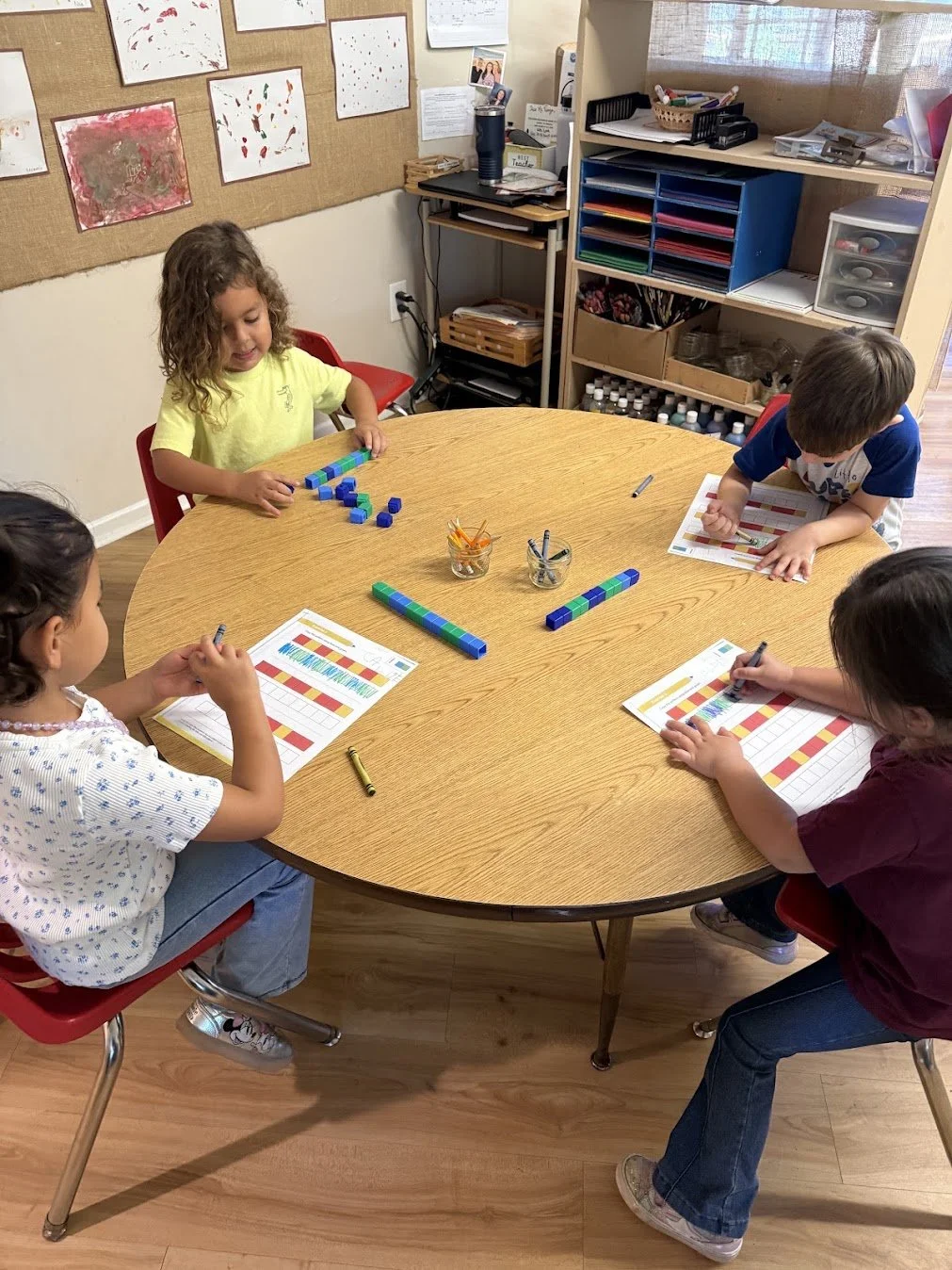
Early TK offers meaningful academic and developmental challenge while preserving the hands-on, active learning that makes preschool so powerful.
Academic readiness develops at different rates. Teachers extend children’s emerging literacy, mathematical thinking, and problem-solving through purposeful play, projects, and targeted instruction, while continuing to strengthen the skills that support learning with others.
Children also practice managing emotions, collaborating, persisting through challenges, and growing in independence within a familiar Preschool environment.
Childhood Is Bigger Than a Classroom
Learning Happens Everywhere
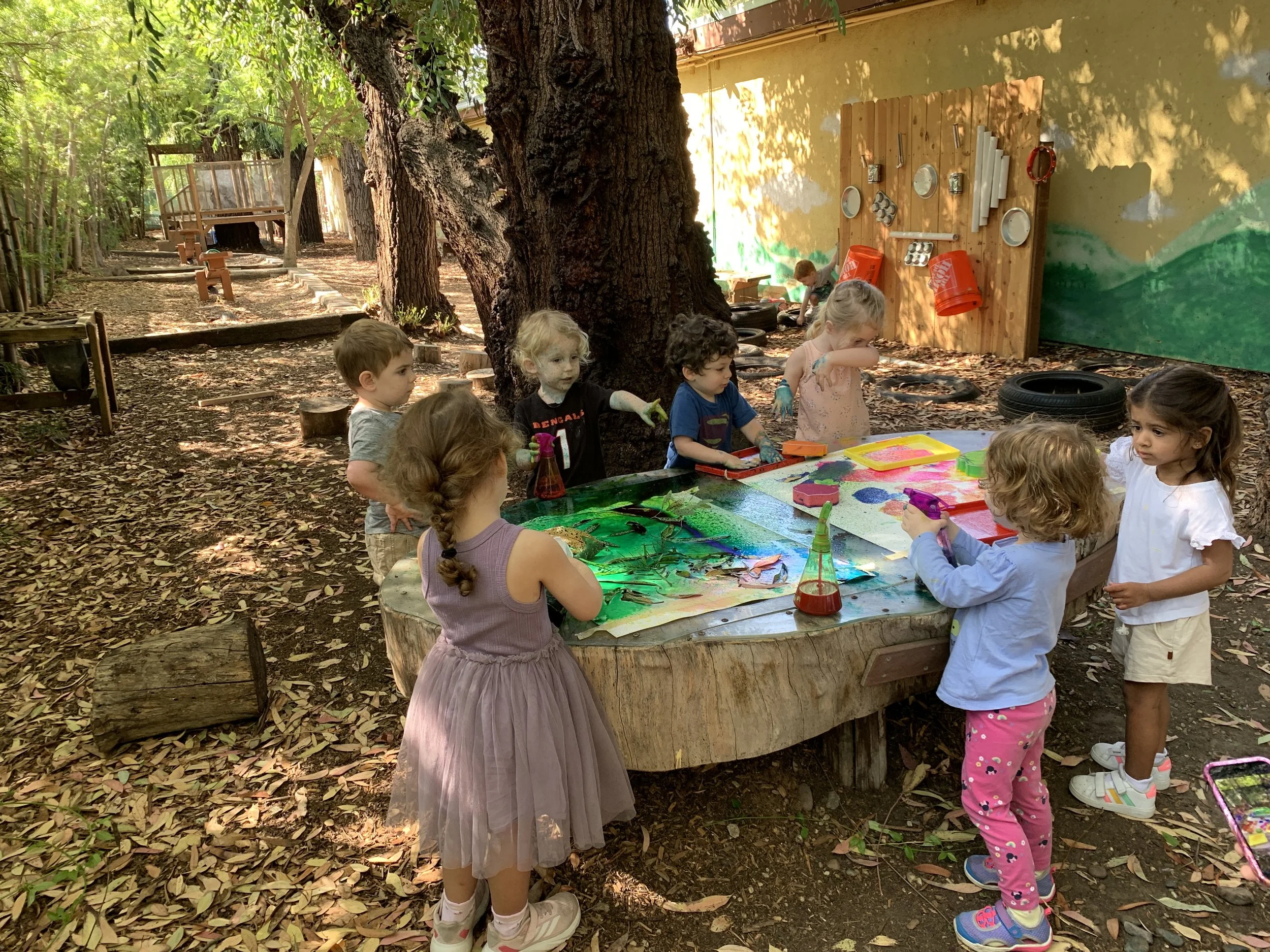
Learning Goes Outside
Outdoor Spaces Are Classrooms, Too
Our outdoor spaces extend learning throughout the day. Oxnard offers a Science & Nature Center, Maker Studio, 500-year-old oak tree, natural yards, soccer field, and sunlit play spaces. At Collins, children explore the Mini Ranch, vegetable gardens, forest, greenhouse, and teeter-totters around a welcoming central quad.
Explore Our Campuses →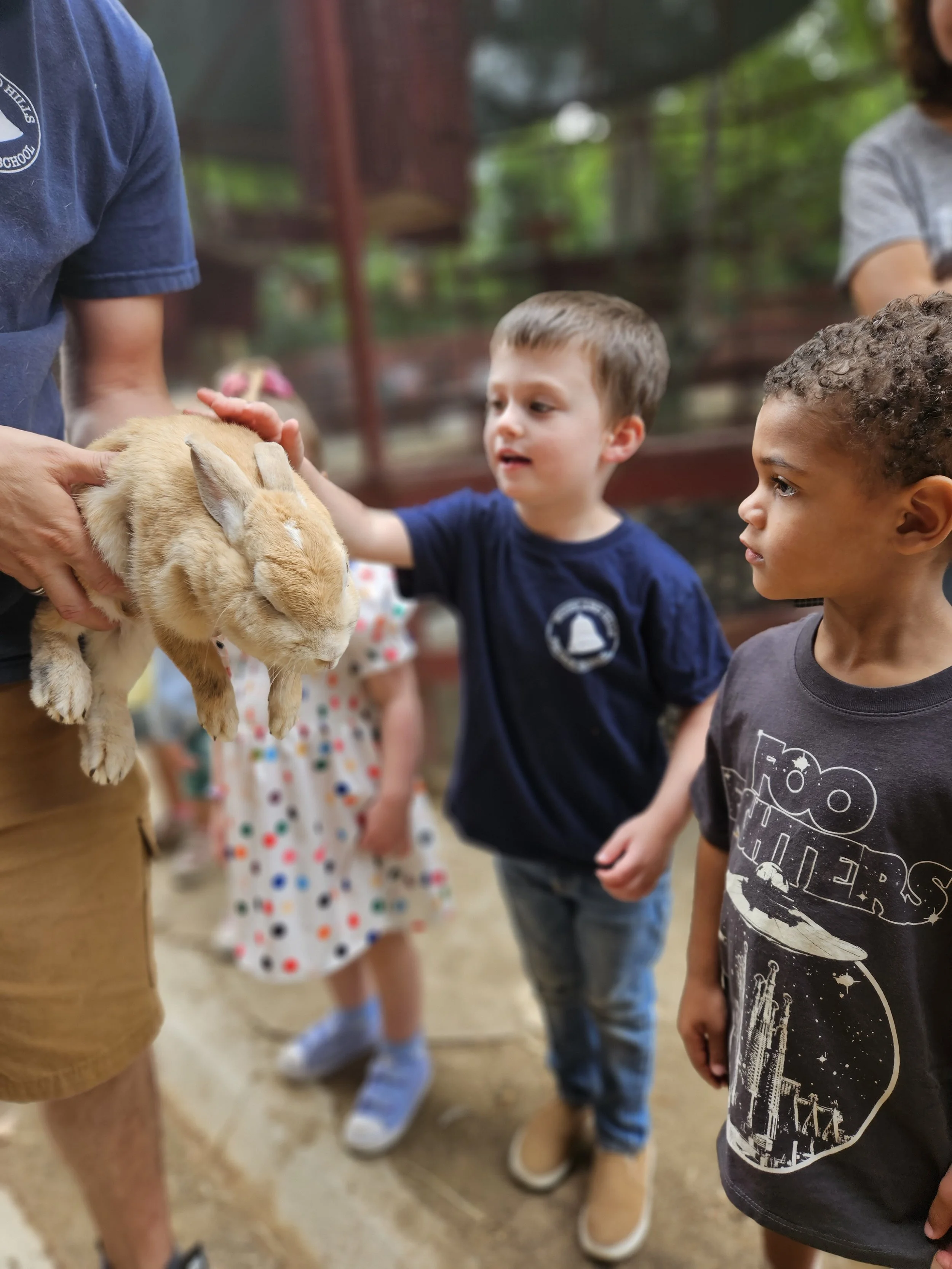
Known & Connected
Relationships Make Learning Possible
Teachers come to know each child's personality, interests, strengths, friendships, challenges, and ways of approaching the world. That helps them know when to offer comfort, when to support, when to challenge, and when to step back and let a child discover, I can do this.
Families are important partners in that process. The more we understand the whole child, the better we can help that child grow.
We take children's learning seriously without asking them to stop being children.
Come See It in Action
See the Full Breadth of Preschool at WHPS
Visit a campus to see children learning, playing, investigating, and growing alongside their teachers and friends.