

Finding the Words and Figuring Out What Comes Next
When a child comes home and says, “Someone told me I couldn’t play,” it can be hard to know what to say first. A simple place to start is, “That sounds like it hurt. Tell me what happened.”
Once children feel heard, we can help them work through their feelings and figure out what comes next. Two tools I regularly use with children of all ages at WHPS are sandpaper words and the Circle of Control. Both help children develop the coping, communication, and problem-solving skills they'll need throughout life.
What I especially appreciate is how these tools grow with children. The same strategies that help a young child navigate a playground disagreement can later help with more complex friendships, academic frustrations, and unexpected challenges. Over time, we see children using these skills with increasing independence, sometimes needing little more than a reminder or a question from an adult.
Helping Children Notice How Words Feel
Sandpaper feels rough. Cotton balls feel soft. For children, that difference provides a concrete way to think about the impact of their words.
Sometimes the difference is surprisingly small. “You can't play right now” might leave someone feeling excluded, while “We're in the middle of a round. Want to join the next one?” communicates the same boundary while leaving room for friendship.
Children can also be kind and firm at the same time. “Please stop. I don't like that” is a respectful way to speak up for themselves. Kindness doesn't mean always agreeing, giving in, or avoiding disagreement.
At WHPS, we practice these skills through Morning Meeting, teacher modeling, and coaching during everyday interactions. When a student reaches for a marker and says, “Give me that,” a teacher might help them pause and try, “Can I use it when you're done?”
If someone's words have hurt a classmate, we help them recognize the impact and think about how to make things right. Sometimes that means trying the words again. Other times, it means listening to how the other person felt and asking what would help.
| Sandpaper Words | Cotton Ball Words |
|---|---|
| “You're doing it wrong.” | “Can I show you another way?” |
| “That idea won't work.” | “I have a different idea. Can I share it?” |
| “Hurry up! You're too slow.” | “Do you want me to wait for you?” |
| “You can't play right now.” | “We're in the middle of a round. Want to join the next one?” |
| “You messed up my drawing!” | “I'm upset that my drawing got marked. Please ask before touching it.” |
The goal isn't for children to avoid disagreements or always find the perfect words. It's to help them express themselves honestly while considering how their words affect others.
What's in My Circle of Control?
Even when children communicate thoughtfully, things won't always go their way. That's where another useful tool comes in: the Circle of Control.
A classmate's words and choices are outside the circle. Inside it are the words children choose, the actions they take, and whether they ask for help when they need it.
At WHPS, we build this understanding over time. In the younger grades, teachers introduce and reinforce the concept through everyday situations. By upper elementary, students apply it more independently, including in their leadership notebooks as they reflect on challenges, set goals, and take greater ownership of their learning.
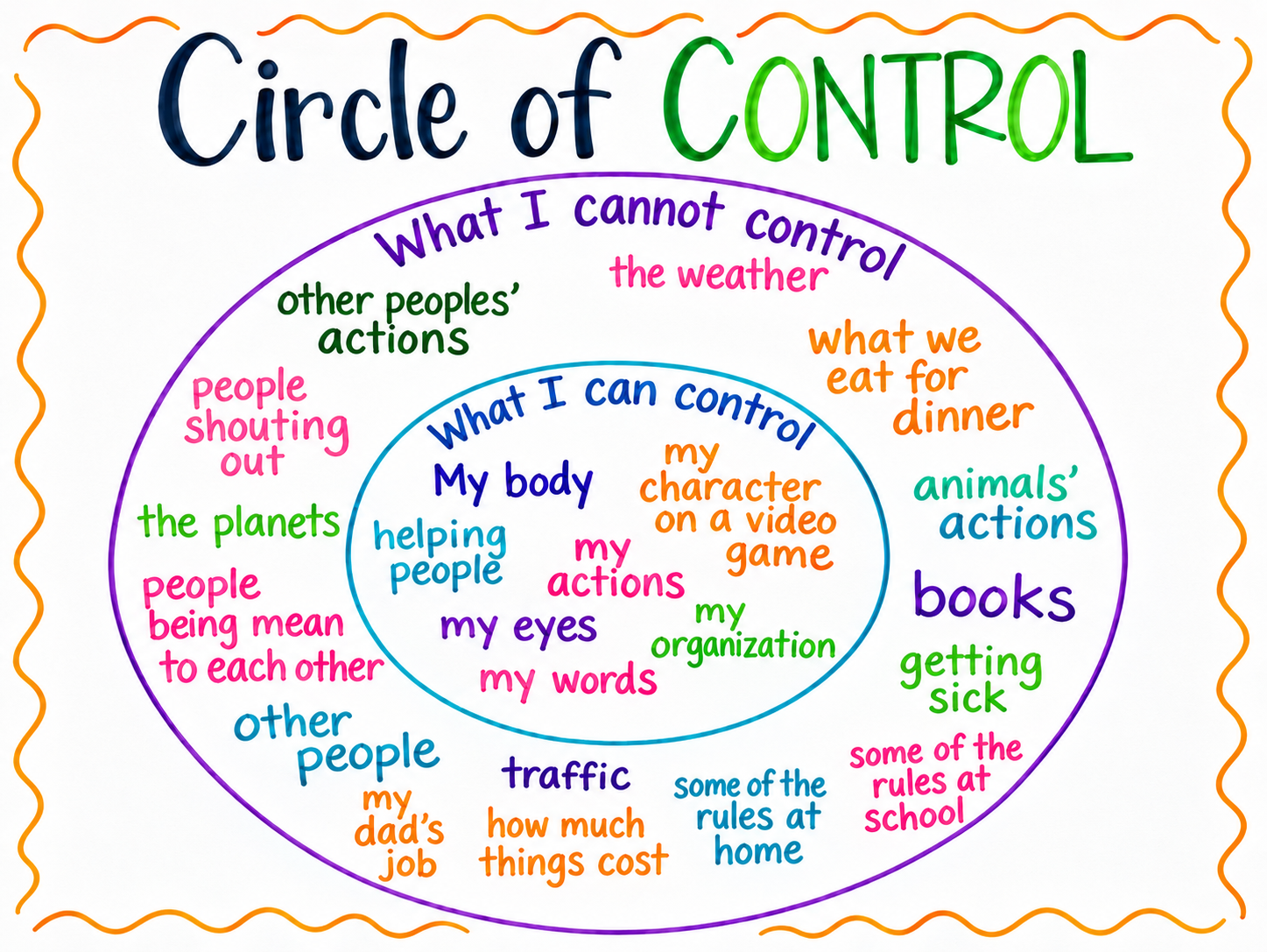
For example, if a classmate makes a frustrating comment during a game, a child might:
- Speak up. “I don't like when you say that. Please stop.”
- Take space. “I'm going to take a break from this game.”
- Ask for help. “Can you help me? I'm having trouble working this out.”
If your child was the one who spoke too sharply, making things right is also within their circle of control. They might say, “I'm sorry. I was frustrated, but I shouldn't have said it that way,” and give the other child a chance to respond.
These lessons extend beyond friendships. The same thinking helps when a math problem feels difficult, plans change unexpectedly, or something doesn't go the way a child hoped.
Disagreements, hurt feelings, and occasional missteps are a natural part of growing up. Because children spend so much of their day learning and playing together, school offers countless opportunities to practice listening, seeing another perspective, and finding a way forward. With guidance, even small frustrations can become meaningful opportunities to grow.
At school, we help students find a next step they can use, whether that means practicing a sentence, taking a moment to settle, or asking an adult to help start a conversation. When hurtful behavior continues or a child feels unsafe, we want them to come to us. Our job is to listen, help, and follow up.
Try It at Home
The next time your child tells you about a tough moment, start with a question that gives them some choice about what they need.
If they're ready to problem-solve, grab a piece of paper and draw a Circle of Control together.
Name what happened and how it felt. Your child might say, “My sibling said my game was boring, and I felt hurt.”
Sort what's inside and outside the circle. Outside, write “what my sibling says.” Inside, write or draw choices your child can make, such as “I can keep playing,” “I can explain how I feel,” or “I can ask for help.”
Choose one next step and practice it. Ask, “What's one thing you could say or do? Who could help if you need it?” Your child might practice saying, “That hurt my feelings. I still want to play.” If they need a moment first, taking a few breaths or sitting together may help.
You can also model the Circle of Control with a small frustration of your own: “I'm disappointed our plans changed. I can take a minute and think of something else we'd enjoy.”
Practicing together during calm moments helps these words and choices feel familiar when children need them most. And as children grow, these same tools help them navigate increasingly complex challenges with greater confidence and independence.
