An independent school education is an investment, and parents should be asking a very reasonable question: What do you actually get for it?
I think our families deserve a clear answer. Some of the answer is tangible and easy to compare. Some of it is much harder to put into a nice black-and-white, side-by-side list. Trust me, I've tried. And I think both matter when you're making an important choice for your child.
Some of the Answer Is Easy to Put in a List
All of those things matter. And I say that with pride. But after 25 years in education, working in both public and private schools, I've come to think they are not the deepest return.
Every once in a while, something happens at school that makes me stop and think: Oh. This is what all of this is for.
The Question Became More Interesting
Last year's accreditation process gave us an unexpected opportunity to step back and ask a different question.
Not simply What do we do? Who comes out the other side?
We looked backward across the students who have come through WHPS over the years. Not just the most extroverted or academically advanced. We looked at the actual young people and tried to distill what they demonstrated in different ways and in different combinations: how they thought, communicated, handled difficulty, related to other people, advocated for themselves, and understood themselves as learners.
And because we get to watch children develop from preschool through fifth grade, we see the beginnings long before we see the finished product. A child who once struggled to enter a group may eventually become the one helping another student work through a conflict. A student who once shut down when something felt difficult may eventually learn to pause and ask, What can I try next?
Those moments are easy to miss when you're looking only at a test score. They are much harder to put into a spreadsheet. But after 25 years in education, I've come to think they tell us a great deal about what education is actually doing.
What We Saw When We Looked Back
That is where our Graduate Profile came from. It wasn't a list of impressive qualities created for a website. It grew out of looking backward and asking what we consistently see in students who have spent their formative years here.
When I look at our fifth graders, these are the qualities I hope to see taking shape: students who can read beneath the surface, write with voice and purpose, solve complex problems, speak with confidence, advocate for themselves and others, and own their growth.
Not because every child should become the same kind of person, but because every child deserves the chance to become more fully themselves.
They Read Beneath the Surface
Read complex texts, consider perspectives beyond their own, draw nuanced inferences, and support their thinking with evidence.
They Write With Voice and Purpose
Develop ideas with sophistication, write for real audiences, revise meaningfully, and develop a voice that is recognizably their own.
They Solve Complex Problems
Break difficult problems apart, identify patterns and connections, test assumptions, compare strategies, and persist when the answer isn't obvious.
They Speak With Confidence
Explain their thinking, respond thoughtfully, adapt to different audiences, and speak publicly with clarity and confidence.
They Advocate and Take Action
Speak up for themselves and others, listen across differences, navigate challenges and conflict, and turn concern into constructive action.
They Own Their Growth
Set goals, use feedback, recognize strengths and challenges, and understand what helps them learn and succeed.
Sometimes We Get to See the Return
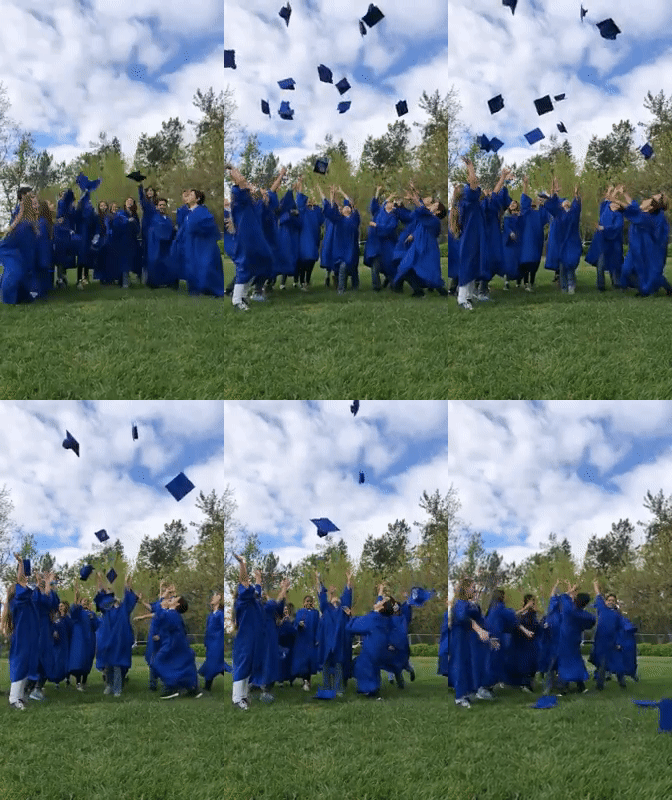
Every year, students and families who have moved on return to campus for our annual alumni middle school panel. I love watching our fifth graders listen to students who were sitting in their seats just a few years earlier.
And I often find myself watching those former students rather than listening to the panel. They are different from one another. They have taken different paths. But you can recognize the same qualities we saw beginning to emerge when they were here.
The point isn't that a child suddenly became confident, independent, thoughtful, resilient, or curious. The point is that we can finally see something that has been developing for years.
The Deeper Return
And this is where I think the return gets really interesting. I still believe families should get strong academics, meaningful challenge, deep learning, and preparation for whatever comes next. Our students do very well academically, including on standardized measures. But even a very strong score tells us only part of the story.
None of this was designed in response to artificial intelligence. Our curricular choices were made long before today's AI conversation, grounded in a belief that education should develop real thinking, communication, curiosity, judgment, independence, and personal growth. But as AI becomes increasingly capable, those are precisely the qualities educators are being pushed to think harder about developing. That is not why we chose this approach. But it does make me feel even more certain about it.
When I think about the students who leave us, the thing I hope most is not that they have figured everything out. It is that they have enough confidence in themselves to enter something unfamiliar, stay with a difficult problem, change their mind when the evidence changes, disagree without losing connection, and ask for help without giving up their independence.
They may not know the answer yet. But they have learned how to keep going.
I can figure things out.
That, to me, is the lasting return.