Elementary at WHPS
A Different Kind of Elementary Education
Every child brings a different mix of strengths, interests, and possibilities to school. At WHPS, learning is designed to move with the child.
Our small learning environment gives teachers the freedom to know students deeply, challenge them thoughtfully, and create an unusually broad school experience filled with academics, science, nature, technology, the arts, movement, friendships, and play.
We believe reaching a child’s fullest potential means more than seeing how far they can go academically. It also means helping children discover what interests them, develop their voice, understand themselves and others, create, question, build, perform, laugh, and genuinely enjoy being a child.
The education is ambitious. The community is joyful and down-to-earth. Children can go remarkably far here and still have a childhood filled with friendships, fresh air, play, laughter, and a school that feels like home.

Our Educational Philosophy
Learning That Moves With the Child
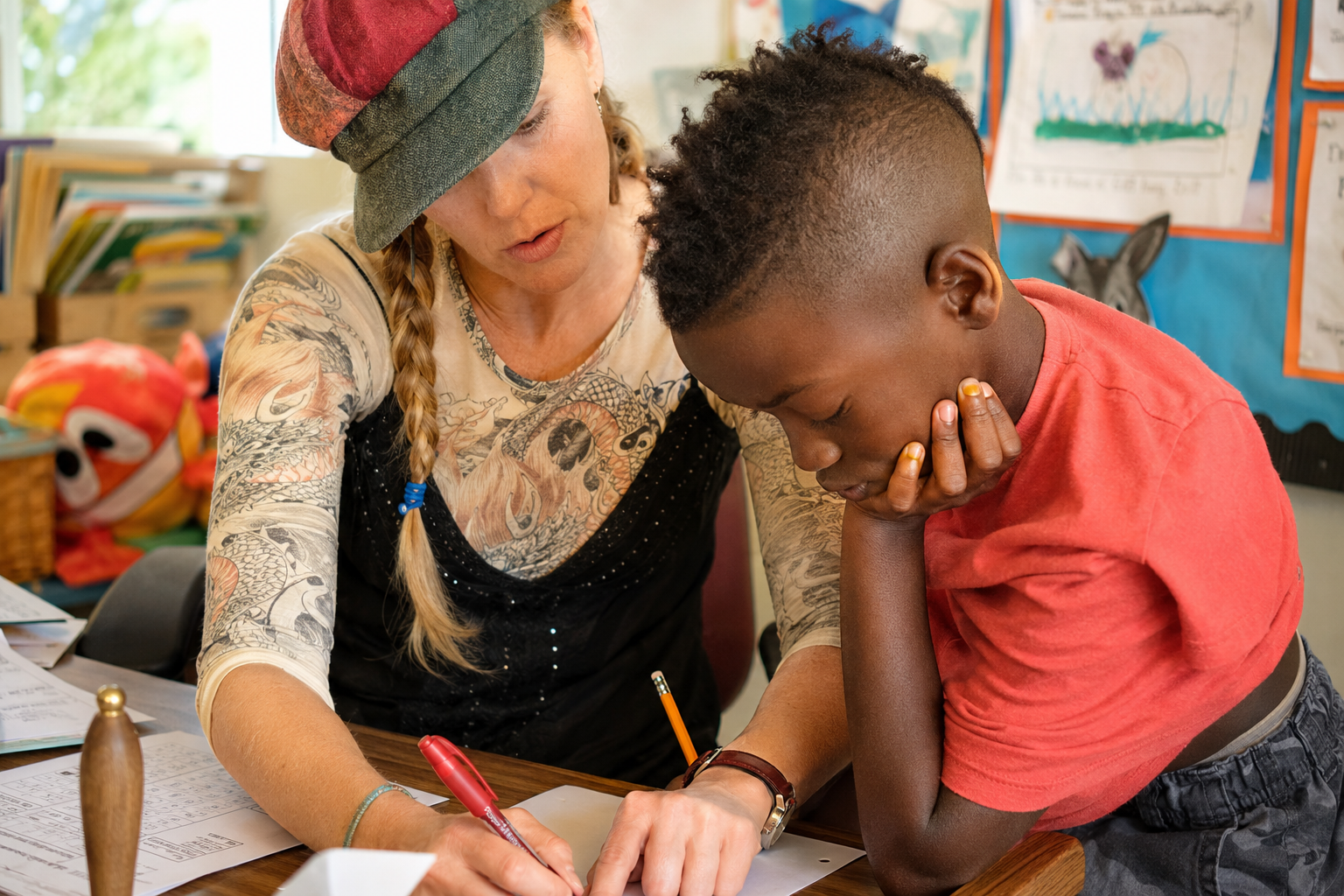
Children do not learn in lockstep. Our educational philosophy starts with that simple reality.
WHPS Learning Progressions map skills from foundational to advanced levels, helping teachers understand what a child already knows, where foundations may need strengthening, and what they are ready to learn next.
With two fully qualified teachers in most classrooms, flexible groups, and frequent individual and small-group instruction, teachers have unusual opportunities to respond as needs change rather than holding every child to the same pace.
A child may need support in one area, be right on track in another, and be working years beyond typical grade-level expectations somewhere else. Our program is built to accommodate that kind of uneven, very human development.
This is especially powerful for the curious, advanced, and gifted learners WHPS often attracts. Children can go deeper and continue forward when they are ready without simply receiving more work, more pressure, or being separated from similar-age peers.
The goal is the right level of challenge, a strong sense of belonging, and a continuous path for growth.
We want children to go remarkably far without rushing them through childhood.
From Our Elementary Principal
A Personal Note from Melanie
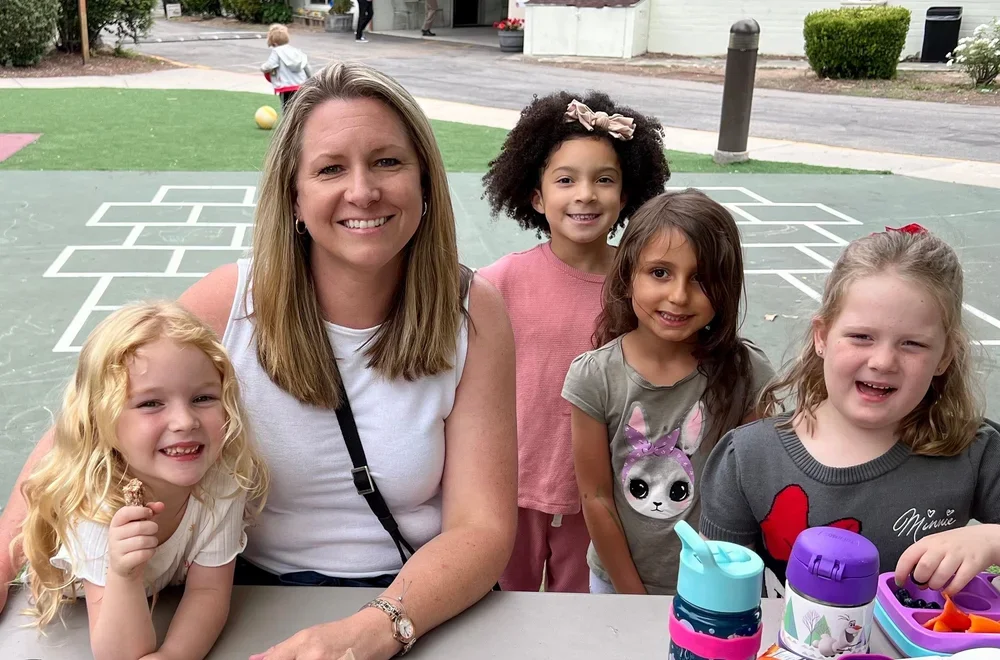
As both the Elementary Principal and a WHPS parent, and after more than 20 years at the school, I have had the unusual opportunity to experience WHPS from several perspectives.
What I value most is how well we know our children. Not simply where they are academically, but what excites them, where they are gaining confidence, when something is not quite clicking, and when they are ready to be pushed further.
There are many excellent schools in Los Angeles. What I think is harder to find is this combination: a deeply thoughtful academic program with the warmth and familiarity of a small, down-to-earth community.
Our teachers know families. Children are heard, seen, and known. At the same time, we take their learning seriously and give them extraordinary room to grow.
As a principal, that is the kind of school I want to lead. As a parent, it is the kind of childhood I wanted for my own child.
I would love to welcome you to campus and let you experience it for yourself.
Melanie Henson Elementary Principal & WHPS Parent
Core Curriculum
A Curriculum Designed for Growth
A truly individualized program still needs a clear, carefully organized path forward.
WHPS Learning Progressions map how essential skills develop from foundational understanding to increasingly complex work. Teachers use assessment, observation, student work, conferences, and daily interaction to identify what each child has mastered, what needs strengthening, and what comes next.
Because those progressions extend well beyond grade-level benchmarks, the curriculum can keep moving as a student is ready.
The result is a carefully organized but genuinely individualized program: strong foundations, purposeful next steps, and virtually no ceiling on growth.
Reading, Writing & Word Study
Literacy at WHPS is taught through a workshop approach that helps children become confident readers, thoughtful writers, and increasingly independent learners.
Teachers explicitly demonstrate strategies that real readers and authors use, often through familiar books and mentor texts. A writing lesson might examine how an author crafts a strong lead, develops a scene, uses dialogue purposefully, controls pacing, or uses conventional and creative nonfiction text features. Children see the technique in authentic writing, practice it, and then make decisions about how to use it in work of their own.
Students read real books, talk about literature with peers, and make meaningful choices about what they read and write. As they grow, the work develops from foundational reading and writing skills into deeper comprehension, inference, analysis, vocabulary, structure, voice, craft, and increasingly purposeful communication.
Individual conferences and targeted small groups allow teachers to focus on the particular skill most likely to move a student forward. A child may be an advanced reader who is refining a particular comprehension strategy, or a sophisticated, imaginative writer who is still strengthening conventions. We teach the child, not simply the grade level.
Foundational literacy is equally intentional. Systematic phonics, decoding, fluency, and word study help children build strong foundations. Rather than simply memorizing the same spelling list for a test, students learn patterns and strategies they can apply to unfamiliar words and authentic reading and writing.
Writing also has a real audience. WHPS Publishing Celebrations give children opportunities to share finished work with classmates, teachers, and families, building pride, confidence, and a genuine sense of authorship.
The goal is for children to take the strategies they learn and use them independently in a new book, a new piece of writing, or an idea entirely their own.
Mathematics
At WHPS, mathematics is about much more than learning procedures or getting the right answer. We want children to become deep mathematical thinkers who can reason, make connections, explain their thinking, and apply what they know to problems they have not seen before.
Our program is built around Singapore Math, an internationally respected approach centered on conceptual understanding, critical thinking, and problem-solving.
A hallmark of Singapore Math is its Concrete → Pictorial → Abstract progression. Children first develop an idea through hands-on experiences, then represent the mathematical relationship visually, and ultimately work confidently with numbers, symbols, and algorithms. This helps students understand not simply how a procedure works, but why.
Tools such as bar modeling help students make complex relationships visible. Children compare strategies, recognize patterns, communicate their reasoning, and persevere through multi-step problems where the solution is not immediately obvious.
The curriculum is academically advanced, with concepts often introduced earlier than in traditional grade-level programs. Students can deepen their understanding or continue into more advanced mathematics when they are ready.
The goal is not simply to produce children who are good at math. It is to develop flexible, confident thinkers who can approach something difficult, make sense of it, and find a way forward.
Science
Science at WHPS is something children do, not simply something they read about.
Students observe closely, ask questions, make predictions, investigate, gather evidence, analyze results, revise explanations, and communicate what they discover.
As children grow, the work develops from firsthand observation and classification into experimental design, systems thinking, evidence-based explanation, and increasingly complex ideas in the life and physical sciences.
Just as importantly, students learn that discovery rarely follows a perfectly straight line. Evidence may challenge an assumption. An experiment may need to be redesigned. A good question may lead to another one.
We want children to know science, but also to learn how scientists think.
Social Studies & Humanities
Social studies at WHPS is not about memorizing a single version of history. Children become curious investigators of people, cultures, ideas, and the forces that shape our world.
Students explore history and current events from multiple perspectives, examining evidence and asking whose voices are represented, whose may be missing, and how the same event can look different depending on where you stand.
The questions grow with the students: What causes people to create change? Why do societies develop differently? How do geography, culture, power, and ideas influence history? What can the past help us understand about the present?
Projects make that inquiry personal. In Upper Elementary, for example, our Finding Your Roots project invites students to investigate their own family histories and connect those stories to larger patterns of migration, culture, identity, and historical events.
Research, literature, primary sources, discussion, projects, and presentations help students understand history as something to investigate rather than simply receive.
The goal is not to tell children what to think about the world. It is to give them the knowledge, curiosity, and critical-thinking skills to think deeply for themselves.
Social-Emotional Learning & Personal Development
The world our children will enter is changing quickly. The particular technologies and careers they encounter may change, but their ability to know themselves, work with others, adapt, communicate, solve problems, and keep learning will endure.
At WHPS, these abilities are intentionally taught. Drawing from child development, executive function, positive psychology, Responsive Classroom, and The 7 Habits of Highly Effective People adapted for children, students learn to communicate with empathy, navigate conflict, reflect on choices, set meaningful goals, and take increasing ownership of their growth.
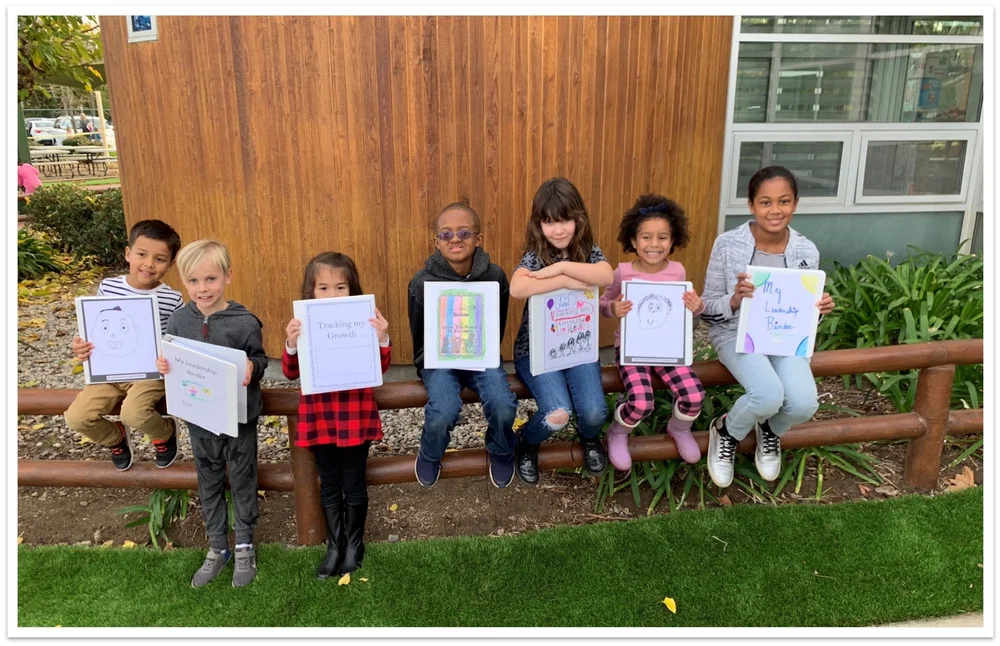
Students learn to recognize their strengths, reflect honestly on where they are growing, and always have a meaningful next goal. As they mature, they set SMART goals, track progress in Leadership Notebooks, and eventually lead Student-Led Conferences, sharing their accomplishments, challenges, and aspirations with their teachers and families.
Expectations grow thoughtfully over time, from the earliest work with self-regulation, communication, and responsibility to increasingly independent organization, leadership, self-advocacy, and ownership of learning.
Academic potential is only part of a child’s potential. We want children to become confident, caring, adaptable people who understand themselves, contribute to their communities, and remain curious learners throughout their lives.
Lower & Upper Elementary
The WHPS experience intentionally evolves as children grow.
In Lower Elementary, TK–1st Grade, children build the academic and personal foundations for everything that follows, becoming confident readers, writers, and mathematical thinkers while developing independence, curiosity, and a love of learning.
Beginning in 2nd Grade, the structure gradually changes. Students begin working with different teachers and, at times, across our 2nd/3rd and 4th/5th multi-age groups.
By 4th and 5th Grade, the day begins to look more like middle school. Students rotate among teachers and subjects, manage increasingly complex projects and responsibilities, and develop the organization, self-advocacy, and independence they will soon need.
They get to practice all of this gradually, within the small community where they are already known so well. By the time middle school arrives, many of its rhythms and expectations already feel familiar.
Curious what this looks like? Explore our Learning Progressions for a simplified, parent-friendly look at how skills build over time.
Enrichment Is Built In
Children can’t discover a strength they’ve never had the opportunity to use.
An extraordinary range of experiences is part of the regular WHPS school day.
Students learn with specialist teachers across science and nature, technology, coding, robotics, making, Spanish, music, visual and performing arts, and physical education.
These experiences are not extras around the edges of school. They give children more ways to investigate, create, perform, build, move, collaborate, and discover strengths and passions they may not have known they had.
Animal & Nature Studies
With more than 80 animals on campus, our Science & Nature Center is a living laboratory where children develop scientific understanding through direct experience.
Led by our full-time Animal & Nature Studies specialists, younger students explore animal behavior, husbandry, anatomy, habitats, ecology, and relationships among living things. As they grow, the science grows with them.
Older students investigate genetics, heritability, adaptation, natural selection, ecosystems, and evolution, moving from observing individual animals to asking sophisticated questions about entire biological systems.
The animals spark the curiosity. The science takes children remarkably far.
Technology, Coding, Robotics & Making
At WHPS, technology is something children learn to understand, create with, and use purposefully, not simply consume.
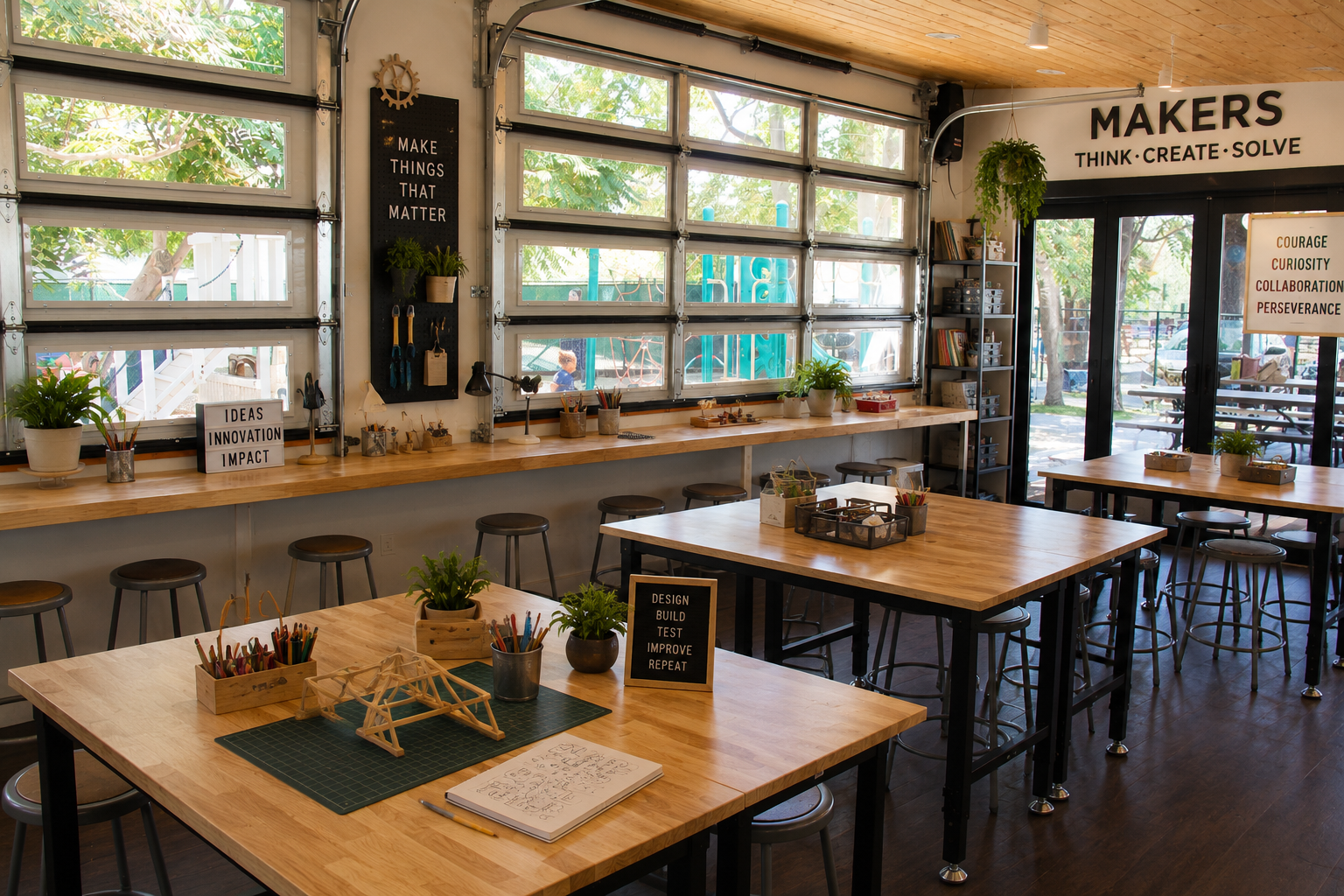
Through coding and robotics, students develop computational thinking and learn how systems work. Projects require them to plan, troubleshoot, collaborate, revise, and persist when the first solution does not work.
Beginning in 2nd Grade, our Maker Program brings design, building, testing, fabrication, and problem-solving into the regular school day.
The tools will change. Knowing how to keep thinking when no one has handed you the next step will matter much longer.
 Music
Music
 Performing Arts
Spanish Language & Culture
Spanish connects our students to hundreds of millions of people, much of the Americas, and an increasingly interconnected world.
With specialist Spanish teachers, students build vocabulary, comprehension, pronunciation, and confidence communicating through conversation, stories, music, games, and increasingly sophisticated language study.
Language and culture are taught together. Students explore the traditions, geography, music, art, history, and everyday life of Spanish-speaking communities around the world, broadening how they see and communicate with others.
Choral & Instrumental Music
Students develop musicianship through singing, rhythm, listening, instrumental study, ensemble work, and performance.
As they grow, children practice toward meaningful goals and experience the creativity, discipline, collaboration, and joy of making music together.
Performance adds another dimension. Children learn to prepare carefully, collaborate, take a creative risk, and share something they have worked hard to create.
Visual & Performing Arts
The arts give children opportunities to imagine, experiment, interpret, revise, perform, and express something distinctly their own.
With specialist teachers, students explore a wide range of materials, techniques, artists, and forms of expression. They develop an understanding that creativity involves observation, experimentation, interpretation, revision, and the confidence to make choices of their own.
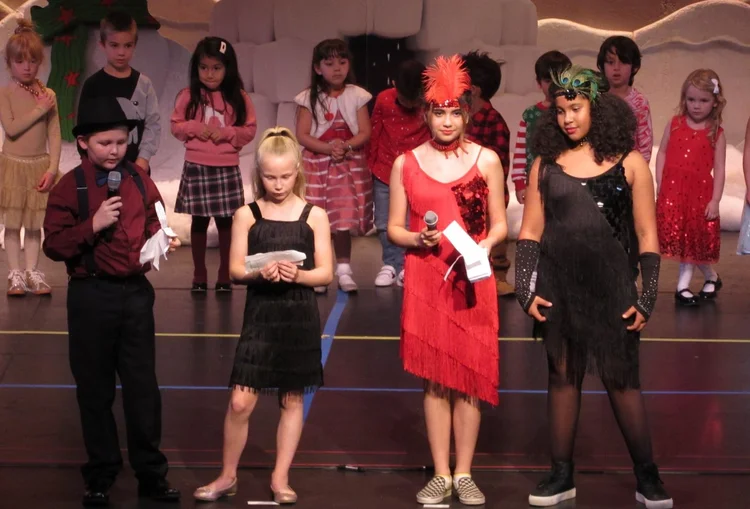
On stage, students build another kind of confidence. They learn to use their voices, collaborate with others, inhabit ideas and characters, and experience the excitement of bringing something to life for an audience.
Physical Education
PE at WHPS is about having fun, trying new things, working toward personal bests, and helping every child feel good about what they can do.
Our longtime PE coach, part of WHPS for more than 20 years, creates an inclusive program centered on sportsmanship, teamwork, movement, and joy.
Students explore a wide range of sports, games, and challenges while learning to compete, collaborate, encourage one another, and keep trying. Competitive after-school teams begin in 3rd Grade for children who want more.
Every child belongs in PE, whether or not they think of themselves as an athlete.

Beyond the Classroom
Learning does not have to stay inside four walls.
Our Library & Story Room gives children a welcoming home for stories, small-group learning, and regular “book shopping” from an extensive leveled collection, helping students choose books they can read successfully and genuinely want to read.
Field trips extend learning into the world beyond campus. Sometimes teachers even plan an experience before introducing a new topic, giving children something real to observe, wonder about, and connect with as a deeper study begins.
By 4th and 5th Grade, overnight experiences add another layer of independence, confidence, friendship, meaningful learning, and adventure.
Visit WHPS
Come See WHPS in Action
A website can explain our program. A visit lets you experience the children, teachers, campus, and community for yourself.