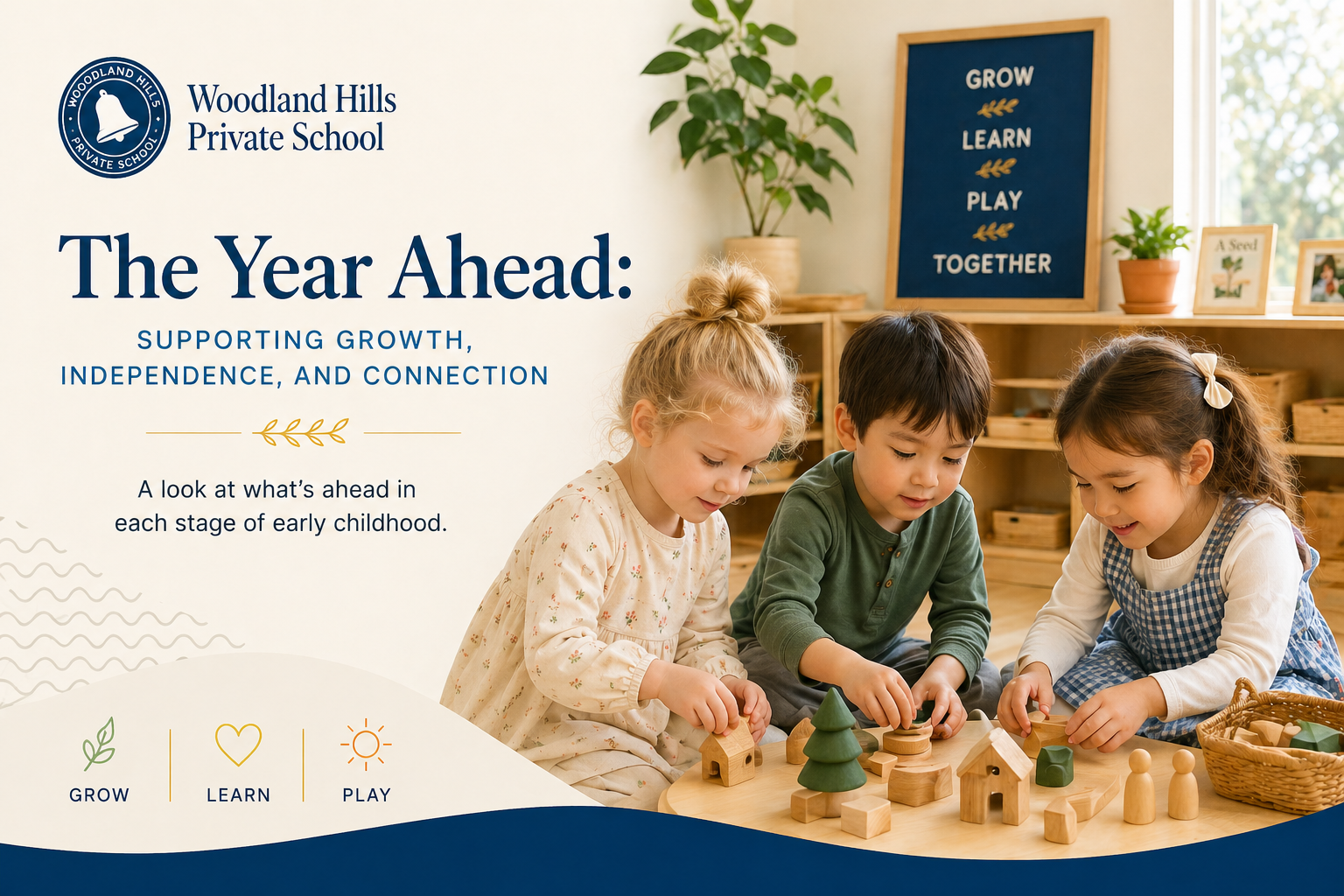
As we come to the end of another school year, we’ve been reflecting on just how much growth we’ve seen in your children. From first friendships to growing independence, from learning to express big feelings to becoming part of a classroom community, this year has been full of meaningful moments.
As we look ahead, we want to give you a clearer picture of what this next stage of development often brings and how we continue to support each child with intention and care.
At Woodland Hills Private School, our play-based, emergent approach means we meet children where they are, while guiding them toward the skills that will help them thrive socially, emotionally, and academically. Each stage of early childhood brings new opportunities for growth, and our classrooms are thoughtfully designed to support children as they build confidence, connection, independence, and a love of learning.
🌱 Terrific Twos: Exploring the World with Support and Security
+
Our Twos are at such a special stage. They are curious, eager, and just beginning to discover their independence, all while still needing strong connections, reassurance, and predictable routines.
This stage often includes a push and pull between wanting independence and needing adult support. In the year ahead, you may begin to see your child:
- Growing more comfortable separating from caregivers with support
- Starting to follow simple classroom routines
- Using gestures, sounds, and emerging words to communicate needs
- Playing alongside peers and beginning to notice others
- Experiencing big emotions and looking to adults for support
In the classroom, we focus on creating:
- A warm, nurturing environment where children feel safe
- Consistent routines that build trust and predictability
- Opportunities for early communication and expression
- Gentle support as children begin to engage with peers
How you can support at home:
- Keep routines consistent, especially around meals, bedtime, and transitions
- Offer simple choices to build confidence and independence
- Talk through daily experiences and label emotions
- Practice short, positive separations when possible
- Read, sing, and talk together often, since language grows through connection
🌼 Thriving Threes: Building Independence, Friendships, and Confidence
+
The Threes years bring such exciting growth. Children are becoming more independent, more expressive, and more interested in building relationships with their peers.
During this stage, children often begin to:
- Join group routines and activities with more consistency
- Engage in cooperative play and form early friendships
- Express needs, ideas, and feelings more clearly
- Work through frustration with support, not avoidance
- Take greater ownership of self-help skills
In the classroom, we focus on:
- Supporting children as active members of a group
- Strengthening communication and expressive language
- Guiding social interactions and problem-solving
- Encouraging independence in everyday routines
How you can support at home:
- Encourage independence with getting dressed, cleaning up, and toileting routines
- Give simple directions and allow time for follow-through
- Create opportunities for social interaction with peers
- Model calm, supportive responses to big emotions
- Keep routines predictable, especially around transitions
🌟 ETK / Pre-K: Growing Confidence, Responsibility, and School Readiness
+
In our ETK classrooms, children are stepping into a new level of independence and awareness. They are capable, curious, and increasingly confident in themselves and their relationships.
At this level, children are increasingly able to:
- Follow multi-step directions more independently
- Participate actively and confidently in group learning
- Navigate friendships and solve problems with peers
- Express thoughts and ideas in more detailed ways
- Take responsibility for routines and classroom expectations
In the classroom, we focus on:
- Building the social and emotional foundations for kindergarten
- Supporting self-regulation and flexible thinking
- Encouraging responsibility and independence
- Fostering strong communication and a love of learning
These skills lay the foundation not just for kindergarten, but for becoming confident, engaged learners in the years ahead.
How you can support at home:
- Encourage independence in daily routines
- Practice listening and following multi-step directions
- Support problem-solving by asking open-ended questions
- Read together daily and engage in meaningful conversations
- Maintain consistent routines to support confidence and readiness
🤝 Our Partnership with You
+
At the heart of everything we do is partnership. We know that each child develops in their own time and in their own way, and we are here to support that journey with care and intention.
If a child needs additional support along the way, we approach those moments with thoughtfulness and collaboration, sharing observations, aligning strategies, and working closely with families to ensure each child feels successful, supported, and understood.
💛 Looking Ahead Together
+
Thank you for being such an important part of our community. Your trust, communication, and partnership are what make this work possible.
We’re excited for the year ahead and for all the growth, independence, connection, and joy that is still to come.