

Woodland Hills Private School
Animal & Nature Studies
April 2026 Curriculum Highlights
|
Try This at Home
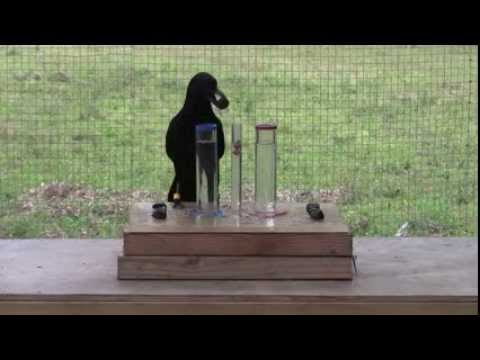
How Smart Are Crows?Kindergarten students explored a classic water displacement puzzle inspired by research on crows. As they tested different approaches, they began to see how animals solve problems through observation, memory, and experimentation. It’s a simple activity, but one that opens the door to deeper questions about intelligence, behavior, and how scientists study the natural world. |
|
What Students Explored This Month
4th–5th Grades — Evolution & Fossils
- Observed the growth of class-planted nasturtium and calendula.
- Examined the human traits that contributed to our evolutionary success, including big brains, tool use, and bipedalism.
- Imagined creatures evolving the ability to create and utilize new tools.
Highlights: Explored
phenotypic plasticity
in plants and animals and compared short-term environmental response with long-term evolutionary change.
What’s Next: Students will compare human and animal physiology, focusing on lungs and skeletons, and watch to see whether our ducks snack on the class-grown nasturtium and calendula.
2nd–3rd Grades — Discovering Species
- Explored human evolution, beginning with LUCA, then meeting Lucy, and ending with us.
- Imagined and illustrated changes in animal physiology between summer and winter in different biomes.
- Investigated extinction and species change through interactive gameplay.
Highlights: Made connections between environment, adaptation, survival, and the ways populations change over time.
What’s Next: Students will compare human and animal body systems, with a focus on lungs and skeletons, and learn about population bottlenecks.
1st Grade — Secret Agent Scientists
- Defeated Dr. Shrubslayer’s plan to turn off photosynthesis by deducing the password to his diabolical device: chlorophyll.
- Played a binomial nomenclature guessing game, using the roots of scientific names to uncover animals’ common names.
Highlights: Connected science, language, and reasoning through creative problem-solving and scientific vocabulary work.
What’s Next: Students will practice calmly handling and grooming the donkey, horses, and cow, and learn the difference between poison and venom in animals and plants.
Kindergarten — Animal Actions
- Investigated parental investment by pretending to gather food for baby birds in a nest.
- Compared animal intelligence by solving a crow-inspired water displacement puzzle.
Highlights: Began connecting behavior, problem-solving, and survival through active experimentation.
What’s Next: Students will play a clicker-training game to learn about animal conditioning and take a donkey on a supervised lead walk.
TK & Preschool — Animal Care & Scientific Observation
- Led horses and donkeys on supervised walks around the Barnyard.
- Explored responsible pet ownership and made connections to animals at home.
- Learned the names of and interacted with baby animals, including our goat kids and brand-new albino snakelet.
Highlights: Built confidence through hands-on care, observation, and early responsibility within a real animal environment.
What’s Next: Students will prepare a goat puzzle box filled with treats and participate in a Barnyard scavenger hunt.